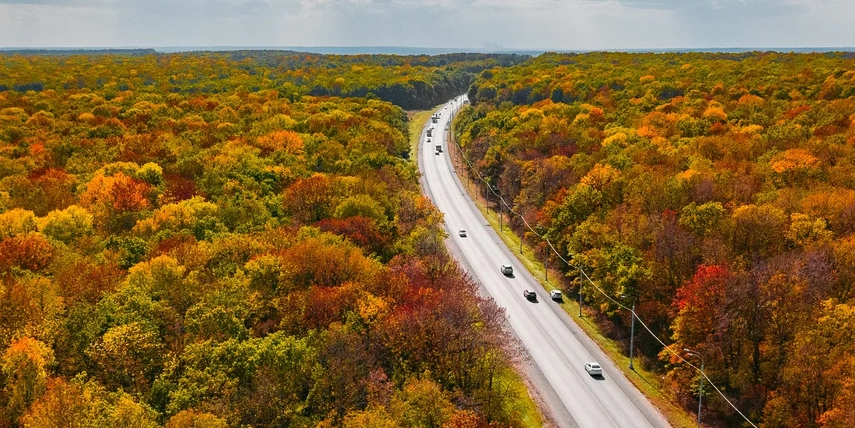
Autumn Road Trips in Europe: E-Vignette Information and Popular Routes
2026. 10. 27. 15:15
At the end of October and beginning of November, many people travel by car across Europe. Autumn school holidays, family visits around All Saints’ Day, and short city breaks can lead to increased traffic on international motorways. This is particularly true of routes connecting Western Europe with Central and Eastern Europe.
Some autumn journeys involve trips of just a few hundred kilometres, while others cross several countries. Family visits from Germany to Romania, transit journeys through Czechia and Slovakia, and long weekends in Slovenia may all involve different toll regulations.
One of the most important preparations for a road trip through several countries is planning the necessary e-vignettes. Since validity periods, vehicle categories, and toll road sections vary from country to country, considering only the distance of the journey is not enough. The dates of the outbound and return journeys, as well as the number of days spent in each country, also matter.
Autumn Holidays and Public Holidays in Europe: When Can Traffic Be Heavier?
In 2026, the end of October coincides with school holidays and public holidays in several countries. Although All Saints’ Day falls on Sunday, November 1, family visits associated with the holiday and school breaks that vary by region may still encourage many people to take longer road trips.
Periods when traffic may be heavier include:
- October 29–31: journeys home and family visits at the end of October.
- November 1–2: return journeys after the holiday.
- November 6–8: return journeys following school holidays that begin later in some regions.
These are not Europe-wide peak traffic days, but rather periods that deserve particular attention based on the holiday calendar. Actual congestion may also be affected by traffic conditions, weather, and roadworks in each country.
Driving from Germany to Romania: A Popular Route Home in Autumn
At the end of October, many motorists living or working abroad travel home to visit family during the holidays. A journey between Germany and Romania is a good example of why it is important to understand the toll regulations of transit countries before setting off on a longer trip across several borders.
Depending on the departure point, one possible route from Germany to Romania passes through Czechia, Slovakia, and Hungary.

Of course, this is not the fastest route from every departure point in Germany. However, it can be a realistic alternative from certain areas of eastern and southeastern Germany, particularly when the destination in Romania is in the western or northwestern part of the country.
Czechia: One-Day or 10-Day Vignette for Transit
In Czechia, most motor vehicles with at least four wheels and a maximum permissible gross weight of 3.5 tonnes require an e-vignette to use toll motorways.
A one-day vignette may be suitable for short transit journeys, while a 10-day vignette may be appropriate for return trips lasting several days. The Czech one-day vignette is valid until the end of the selected calendar day, so journeys that continue after midnight must also be taken into account when crossing the country late in the evening.
Slovakia: The Transit Date Determines the Appropriate Vignette
Slovakia operates a time-based e-vignette system on designated motorways and expressways. Several validity periods are available for passenger cars travelling through the country, including one-day, 10-day, and 30-day vignettes.
If both the outbound and return journeys take place within ten calendar days, a 10-day vignette with an appropriate start date may cover both crossings. For longer stays, however, a different validity period, such as 30 days, may be necessary.
Hungary: The Return Date Is Important Too
In Hungary, an e-vignette matching the vehicle category is required to use toll motorways and expressways. Nationwide one-day and 10-day Hungarian vignettes can be particularly useful when planning shorter journeys.
For example, if the outbound journey passes through Hungary on October 29 and the return journey takes place on November 3, a nationwide 10-day e-vignette starting on October 29 may be valid for both trips.
Romania: The Rovinieta Is Not Limited to Motorways
In Romania, the rovinieta is an electronic road-use permit required for the country's national toll road network. This means it may also be necessary when leaving the motorway and continuing the journey on national roads.
The regulations governing Romania's road toll system changed on October 1, 2026. Vehicle category, validity period, and environmental classification all play a role in determining the rovinieta fee. It is therefore particularly important to ensure that the appropriate road-use permit complying with the new regulations is in place for journeys at the end of October.
Other Autumn Routes in Europe: Czechia, Slovakia, and Slovenia
Autumn road trips are, of course, not limited to family visits. At the end of October, many travellers also choose shorter European city breaks, trips into nature, or road trips combining several countries.
Czechia – Autumn City Breaks and Central European Road Trips
Prague, Brno, and other Czech cities remain popular destinations during the cooler months. An appropriate e-vignette is required to use toll motorways, although some motorway sections may be toll-free. For journeys covering several cities, a 10-day or 30-day vignette may also be worth considering.
Slovakia – Mountain Excursions and Transit Routes
The Tatra Mountains and Slovak cities are suitable destinations for short autumn trips, while the country also lies along several important international transit routes. Knowing which expressway sections are subject to tolls and the dates of travel helps motorists choose the appropriate e-vignette.
Slovenia – A Long Weekend Among Lakes and Mountains
Lake Bled, Ljubljana, and the Slovenian mountains remain attractive destinations in autumn. Eligible vehicles require an e-vignette to use Slovenia's toll motorways and expressways. The shortest standard validity period is seven days, which may be sufficient even for a trip lasting just a few days.
Combining different countries can naturally be part of an autumn road trip. However, the e-vignette requirements of each country along the chosen route must be checked separately, as a vignette purchased for one country cannot automatically be used on toll roads in another.

Which E-Vignette Do You Need for a Road Trip at the End of October?
One of the most important factors when choosing an e-vignette is the duration of the journey. A three-day excursion, a week-long family visit, and a transit journey through several countries may not all require the same validity period.
The following e-vignette validity periods may be relevant for passenger cars in the five countries in autumn 2026:
| Country | Validity Periods |
|---|---|
| Hungary | 1 day, 10 days, monthly |
| Romania | 1 day, 10 days, 30 days, 60 days |
| Czechia | 1 day, 10 days, 30 days |
| Slovakia | 1 day, 10 days, 30 days |
| Slovenia | 7 days, monthly |
Which Validity Period Is Suitable for a Long Weekend or Family Visit?
Seven-day and 10-day e-vignettes can be particularly practical for trips lasting several days, provided that all use of toll roads in the relevant country falls within the validity period.
For example, a journey beginning on October 30 and ending on November 3 may be covered by a single e-vignette of the appropriate duration in several countries. The validity period may begin on different dates in each country, as travellers do not necessarily pass through every country on the same day.
Common Mistakes on Autumn Road Trips Through Several Countries
Problems involving e-vignettes are often caused not by complicated regulations, but by small changes to travel plans.
One common problem is overlooking the return date. A family visit originally planned to be short may be extended by a few days, meaning that the vignette purchased for the outbound journey is no longer valid for the return trip.
Another common misconception is that leaving the motorway automatically eliminates the obligation to pay road tolls in every country. In Romania, for example, the rovinieta applies to toll sections of the national road network, not just motorways.
Vehicle categories also deserve attention. In Slovenia, for example, the distinction between toll categories 2A and 2B for two-track vehicles weighing up to 3.5 tonnes also depends on the vehicle's height above the front axle, alongside separate rules for motorhomes.
Choosing the correct category matters because even an e-vignette with a valid duration can lead to toll-related problems if it was purchased for the wrong vehicle category.
Autumn Weather and Earlier Nightfall: What Else Should You Consider?
At the end of October, weather conditions can vary considerably across different parts of Europe. While lower-lying areas may experience rain and fog, mountain routes can sometimes have snowy or icy road conditions.
Daylight saving time ends across much of Europe on October 25, 2026. After the clocks change, darkness falls earlier according to the clock, which is particularly important for journeys starting in the late afternoon or continuing across several countries.
Due to changing visibility, wet road surfaces, and possible roadworks, it is advisable to allow some extra time when planning a journey. This is particularly useful during holiday periods, when significant traffic congestion can disrupt the schedule of an entire trip.
Buy E-Vignettes in Advance: Easier Preparation for Multi-Country Road Trips
Before setting off on a longer European road trip, it is worth checking which countries' toll road networks the route passes through and which days require a valid road-use permit in each country.
Purchasing Hungarian, Romanian, Czech, Slovak, and Slovenian e-vignettes online in advance can help travellers avoid having to arrange toll payments while in transit. This can be particularly convenient during the holiday period at the end of October, when many motorists set off early in the morning or late at night.
By choosing the appropriate validity periods, both the outbound and return journeys can be planned in advance, reducing the likelihood of problems caused by an expired or missing road-use permit.
Summary
The period around All Saints' Day offers many people an opportunity to visit family, take a short break, or travel through several countries.
Understanding the toll regulations of the countries along the route is one of the keys to a smooth journey. Hungary, Romania, Czechia, Slovakia, and Slovenia have different validity periods and vehicle categories, so it is worth planning the route and e-vignettes for travelling abroad together.
With digital road-use permits purchased in advance and consideration given to expected traffic and weather conditions, international road travel at the end of October can become more predictable.
Frequently Asked Questions
Which European countries require an e-vignette for a road trip through several countries?
In Hungary, Czechia, Slovakia, and Slovenia, eligible vehicles require an e-vignette to use designated motorways and expressways. In Romania, the rovinieta applies to the national toll road network. The exact requirements always depend on the route and vehicle category.
Which e-vignettes might you need when driving from Germany to Romania?
On a route through Czechia, Slovakia, and Hungary, e-vignettes may be required in all three countries, along with a rovinieta in Romania.
Is a 10-day e-vignette sufficient for a return journey at the end of October?
Yes, provided that all use of toll roads in the relevant country falls within the validity period of the 10-day vignette. If the return journey is postponed, an additional vignette or one with a longer validity period may be necessary.
Is there a one-day motorway vignette in Slovenia?
No. In Slovenia, the shortest standard e-vignette for passenger cars is valid for seven days. Therefore, even a one-day journey on Slovenian motorways may require a seven-day vignette.
Do you need an e-vignette in Romania if your route does not include motorways?
Yes, you may. The Romanian rovinieta is required for the use of the national toll road network, so avoiding motorways does not automatically eliminate the obligation to pay road tolls.